
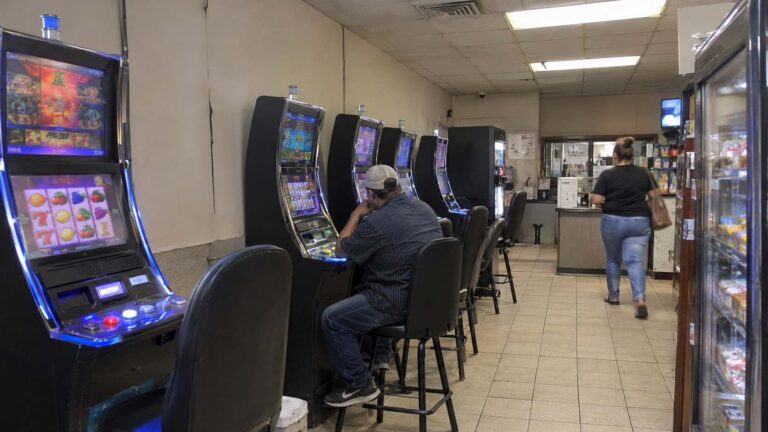
Walk into certain convenience stores, small arcades, or game rooms across Texas, and you might see machines that look almost identical to casino slots. They have spinning symbols, flashing lights, and buttons that let you play for prizes. Yet Texas does not allow ordinary commercial casinos to operate slot machines.
The explanation lies in a narrow exception to state gambling law. Many of the machines are known as eight-liners, and some operators claim they qualify as amusement devices rather than illegal gambling equipment. The type of prize a machine awards is central to that claim.
However, the presence of a machine does not automatically mean it operates legally. Texas has spent decades dealing with disputes over eight-liners, their prizes, and the businesses that operate them.
Are Slot Machines Actually Illegal in Texas?
Traditional casino slot machines are generally illegal in Texas. The state prohibits most forms of commercial gambling, including games where customers pay for a chance to win money.
Under Chapter 47 of the Texas Penal Code, a gambling device includes equipment that gives someone an opportunity to win something of value through chance in exchange for payment.
The law covers more than traditional slot machines. Electronic versions of poker, roulette, blackjack, and similar games can also qualify as gambling devices.
Texas does permit certain gambling activities under separate legal arrangements, including the state lottery, charitable bingo, and authorized horse racing wagers. Tribal gaming operates under a different legal framework.
For ordinary businesses, however, purchasing a slot machine and offering cash prizes is not automatically lawful simply because the establishment has a business license.
View this post on Instagram
What About Online Slot Games and Sweepstakes Casinos?
Slot-style entertainment is also available online, although traditional real money online casinos are not licensed by Texas.
Social casinos generally use virtual currencies for entertainment. Sweepstakes-style platforms may offer promotional entries and prizes under separate terms, depending on the operator and the applicable law.
Unlike an eight-liner inside a convenience store, online games are accessed through websites or mobile devices. Availability and eligibility can differ between platforms.
If you want to explore the online side of slot-style entertainment, try Sweepsy. It tracks sweepstakes-style social casinos, promotions, and state availability, so you can compare the different sites and games being offered. Sweepsy itself is a comparison platform rather than a casino.
Before joining any platform, check its age requirements, state restrictions, and rules for participation. A website being accessible in Texas does not, by itself, establish that every activity it offers is legally permitted.
What Are Eight-Liner Machines?
View this post on Instagram
Eight-liners are electronic gaming machines that resemble traditional casino slots. Players activate a game and attempt to match symbols along designated lines on the screen.
The name comes from the eight possible winning lines associated with the original machines.
In appearance, an eight-liner can be difficult to separate from a conventional slot machine. Both may feature spinning symbols, colorful graphics, sound effects, and credits displayed on a screen.
The major legal difference concerns how the machine operates and what players receive after winning.
According to the Texas State Law Library, certain eight-liner machines may qualify for an exception intended for amusement devices that award small noncash prizes.
However, machines that award cash or prizes outside the legal restrictions can qualify as illegal gambling devices.
The Fuzzy Animal Exception Explains Why Some Machines Are Allowed
The unusual name comes from a familiar type of amusement game. Think about an arcade machine where you pay to play and potentially win a small stuffed animal.
The fuzzy animal exception is one of several unusual Texas laws that can surprise residents and visitors alike.
Texas lawmakers created an exception for certain amusement machines that award inexpensive merchandise rather than money.
Section 47.01(4)(B) of the Texas Penal Code excludes qualifying devices designed solely for genuine amusement purposes when they award permitted noncash prizes.
The maximum wholesale value of a prize available through a single play cannot exceed the lesser of two amounts.
- Ten times the amount charged for one play.
- Five dollars.
For example, if a game costs 25 cents to play, the maximum qualifying prize value under that calculation is $2.50. A game costing $1 per play would still face the $5 limit.
However, the dollar amount is only part of the rule. The machine must also meet the legal requirements governing the type of prizes awarded and its genuine amusement purpose.
The exception does not authorize ordinary cash payouts. A machine offering money, cash equivalents, or disallowed redemption arrangements can fall outside the exception.
Why Are There So Many Eight-Liner Game Rooms?
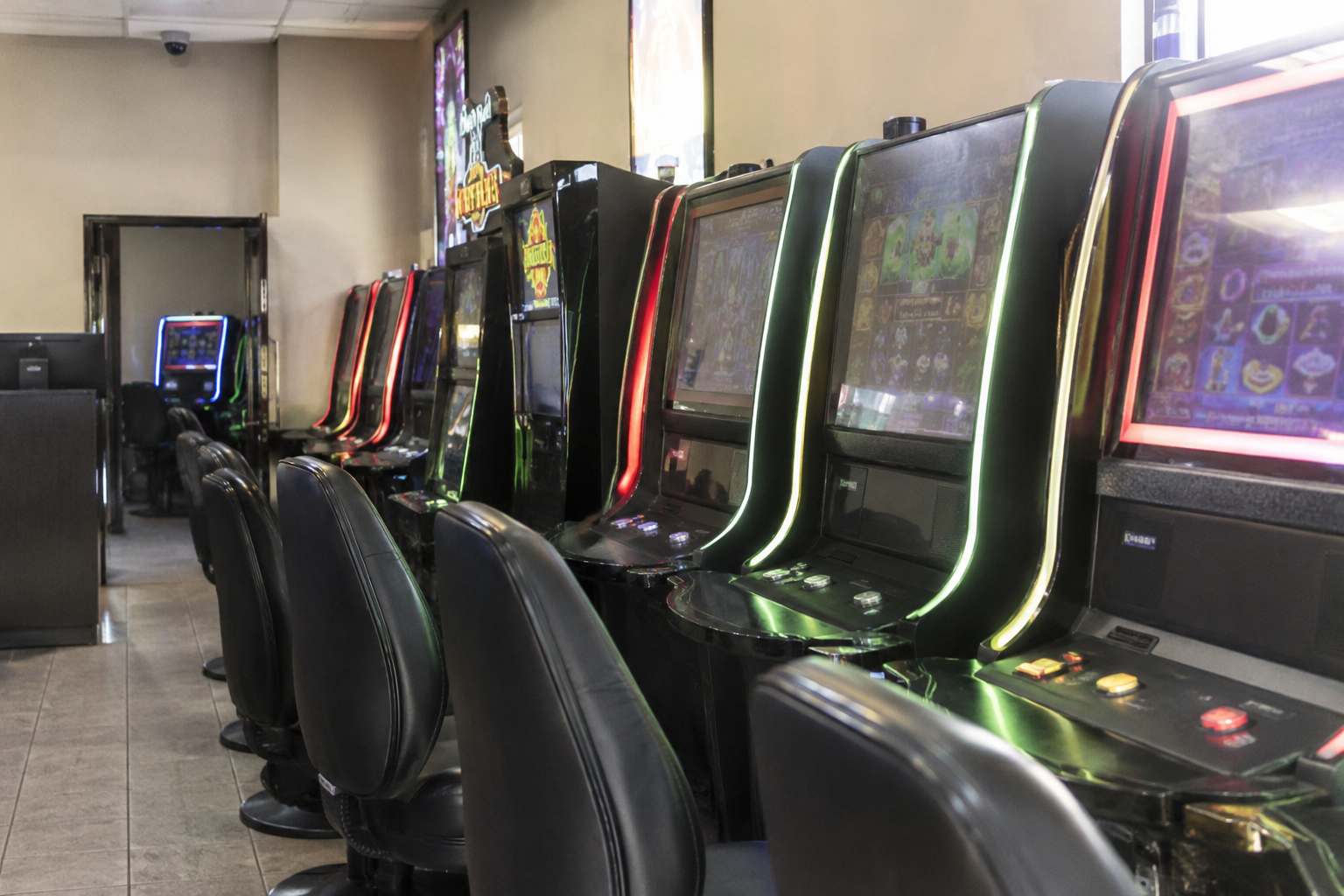
The narrow amusement exception created an opportunity for businesses to offer electronic games without operating conventional casinos.
Game rooms may contain rows of eight-liners, sometimes accompanied by other amusement machines. Customers can purchase credits and play games that resemble casino slots.
Some establishments operate within the permitted amusement rules. Others have faced investigations or legal challenges involving prizes and gaming equipment.
Several factors help explain why eight-liner businesses continue operating across Texas.
Game Rooms Are Not Automatically Illegal
Texas law permits game rooms under certain conditions. Operating a game room is not itself prohibited, provided the business does not contain illegal gambling devices.
The distinction concerns the actual machines and activities taking place inside the establishment.
A business containing lawful amusement games is different under the law from one using similar equipment to distribute cash winnings.
Local Governments Have Different Regulations
Texas counties have authority to regulate game rooms under Chapter 234 of the Local Government Code.
The Texas State Law Library explains that counties can establish location restrictions, require permits, and inspect game rooms.
For example, a county may restrict how close a game room can operate to a school, residential neighborhood, or place of worship.
Requirements therefore vary depending on the location. A business operating in one county may face different local conditions than a similar establishment elsewhere in Texas.
However, local permits cannot make an otherwise illegal gambling device lawful.
Proving a Violation Can Require an Investigation
A machine’s appearance alone does not establish that it violates the law.
Investigators may need to examine the equipment, its software, the prizes offered, and how customers redeem winnings.
Operators and authorities have repeatedly disagreed over which prizes qualify under the amusement exception.
Texas courts have considered disputes involving redemption tickets, stored value, and devices that appear to satisfy certain restrictions but may operate as gambling machines.
Legal disputes can continue long after an establishment opens, which helps explain why some game rooms remain visible even when their operation is challenged.
Can You Win Real Money Playing Eight-Liners in Texas?
A traditional gambling machine that accepts money and pays out cash winnings generally falls outside the amusement exception.
Eight-liners operating under the exception are limited to qualifying small noncash prizes.
Some businesses have attempted to use alternative prizes or redemption arrangements, leading to disagreements over their legality.
For example, a ticket redeemable for a small permitted toy is different from a ticket that effectively represents a cash payment.
The Texas Attorney General addressed this issue in Opinion GA-0913, concluding that machines awarding tickets redeemable for items outside the permitted prize categories did not qualify for the exception.
If a game room advertises cash prizes, its operation should not be assumed lawful merely because similar establishments exist nearby.
Why Do Tribal Casinos Have Machines That Look Like Slots?
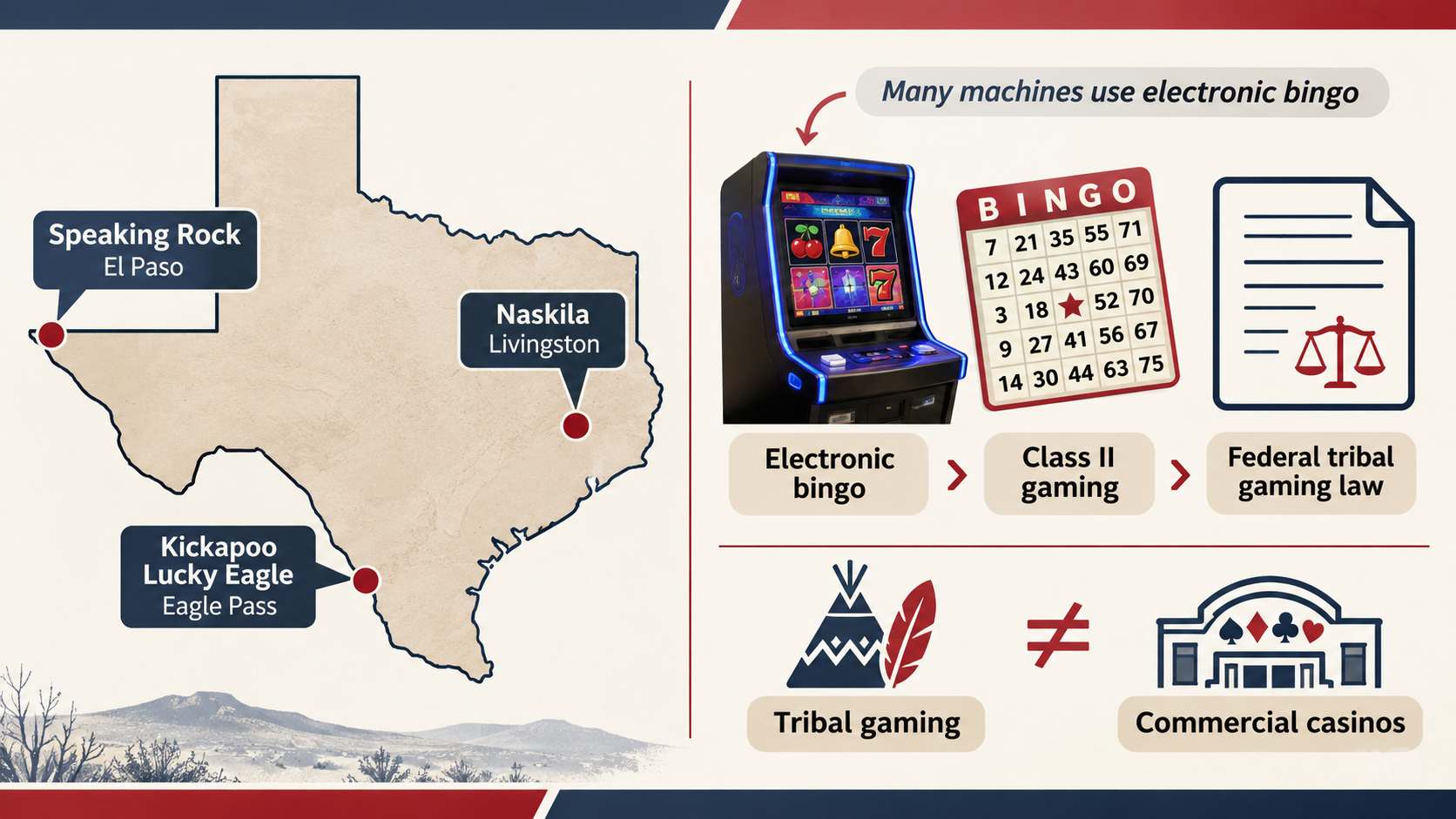
Another source of confusion comes from the electronic gaming machines found at tribal casinos in Texas.
- Kickapoo Lucky Eagle Casino Hotel near Eagle Pass.
- Naskila Casino near Livingston.
- Speaking Rock Entertainment Center in El Paso.
Many machines at these establishments resemble conventional casino slots, but the games operate under tribal gaming laws and may use electronic bingo systems.
Class II gaming under the federal Indian Gaming Regulatory Act includes certain forms of bingo, including games using electronic technology.
The legal situation differs from the commercial casino industry. Tribal governments have specific rights and responsibilities under federal law, with additional legal questions determined through legislation and court decisions.
The U.S. Supreme Court addressed a major dispute involving tribal gaming in Ysleta del Sur Pueblo v. Texas, a case concerning the relationship between federal tribal gaming protections and Texas gambling restrictions.
Consequently, finding electronic gaming machines at a tribal venue does not mean commercial businesses elsewhere in Texas have the same legal authority to offer them.
Could Texas Legalize Traditional Slot Machines?
Texas lawmakers have repeatedly considered proposals to expand gambling, including commercial casinos and sports betting.
Supporters argue that regulated casinos could attract tourism, create employment, and generate tax revenue. They also point to Texans traveling to neighboring states to visit casinos.
Opponents raise concerns about problem gambling, the social costs associated with gambling expansion, and the regulatory changes required to establish a commercial casino industry.
Texas has not authorized a general commercial casino market. Major expansion would require substantial legislative action, and proposed constitutional changes would also require voter approval.
Until the law changes, the presence of eight-liners should not be confused with the legalization of ordinary slot machines.