
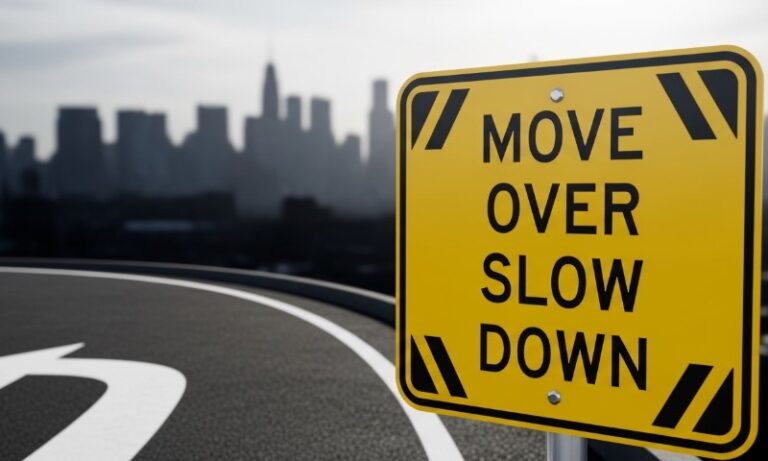
Texas law requires drivers to take immediate action when approaching stopped vehicles with flashing lights.
Known as the “Move Over or Slow Down” law, it focuses on creating a safety buffer for people working along the roadside.
Drivers must either change lanes or reduce speed to lower the risk of collisions.
Recent updates that took effect on September 1, 2025, expanded the scope of vehicles covered and strengthened enforcement efforts. Increased traffic volume and more roadside operations in 2026 have made compliance more critical than ever.
Authorities are placing greater attention on driver behavior in these situations, leading to more stops and citations across the state.
Key Updates for 2026
Updated version of the law in 2026 reinforces protection for a wide range of roadside personnel. Coverage now includes many types of workers who maintain infrastructure, enforce regulations, or provide essential services.
Any vehicle displaying flashing warning lights qualifies under the rule, provided it is engaged in official duties. Scope now extends well past emergency response scenarios.
Driver responsabilities are clearly defined:
- Change lanes when safe and permitted
- Maintain a safe distance from stopped vehicles
- Reduce speed if a lane change cannot be completed
- At least 20 miles per hour below the posted speed limit
- On roads with speed limits of 25 miles per hour or lower, slow to 5 miles per hour
Enforcement efforts have increased across Texas. Law enforcement agencies are actively monitoring compliance through targeted operations and statewide campaigns. Thousands of traffic stops have been recorded, signaling stricter oversight.
Updated law is also part of broader driving regulation updates introduced in 2026, placing additional focus on roadway safety and driver accountability.
Expansion of the Law (Pre-2026 Changes)
Lawmakers recognized that roadside risks extended far beyond emergency response teams. Workers in transportation, towing, and utilities often operated in the same hazardous conditions.
Expansion in 2023 added several key groups:
- Texas Department of Transportation vehicles
- Tow trucks assisting disabled vehicles
- Utility service vehicles working on power, water, or communication lines
These additions acknowledged that roadside incidents are not limited to emergencies. Routine service operations often place workers close to moving traffic.
Senate Bill 305, which took effect on September 1, 2025, pushed the law further. Coverage expanded to include:
- Animal control vehicles responding to public safety concerns
- Parking enforcement vehicles operating in active traffic areas
- Municipal waste collection trucks
- Highway maintenance and toll project vehicles
Each addition increased the number of real-world situations where drivers must respond. Public service vehicles frequently stop along roads, often with limited space and high exposure to passing traffic.
Combined changes significantly broadened the law’s reach. Any authorized vehicle performing public duties with flashing lights now signals a legal requirement for drivers to take action.
Driver Responsibilities Under the Expanded Law

Drivers must respond immediately when approaching any stopped vehicle with active flashing lights.
Failing to do so can result in serious consequences, and in the event of an accident, a Houston car accident lawyer may be necessary to help determine liability.
Quick recognition and proper action are essential to prevent accidents.
Primary responsibility involves changing lanes:
- Move into the next lane away from the stopped vehicle
- Ensure the maneuver is safe and follows traffic laws
If lane changes are not possible due to traffic conditions, drivers must reduce speed:
- Lower speed by at least 20 miles per hour under the posted limit
- On roads at or below 25 miles per hour, reduce speed to 5 miles per hour
Law applies to a broad range of vehicles, including:
- Police, fire, and emergency medical services
- Tow trucks assisting stranded drivers
- Utility service vehicles conducting repairs
- Texas Department of Transportation crews
- Animal control and parking enforcement vehicles
- Municipal waste and highway maintenance units
Trigger for action is clear. Activation of overhead flashing lights signals the requirement. Drivers must not delay or ignore the situation once those lights are visible.
Background of the Texas Move Over Law
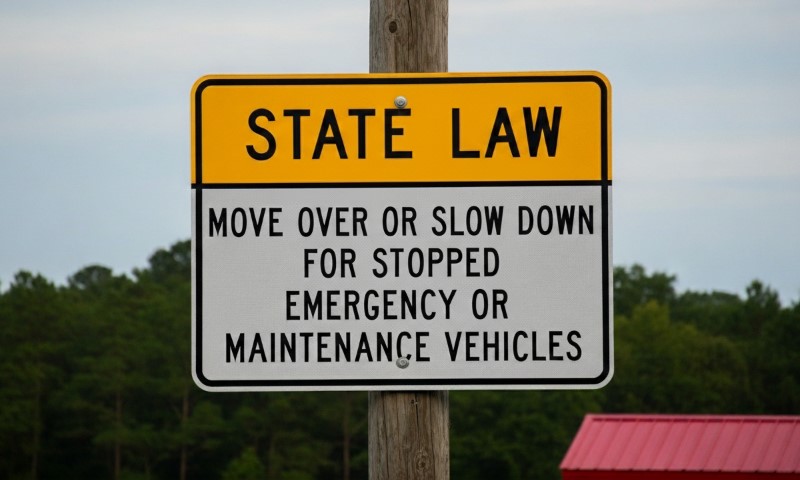
Texas introduced the Move Over law in 2003 in response to growing concerns about roadside safety.
Emergency responders frequently faced dangerous conditions while assisting motorists, conducting traffic stops, or responding to incidents along busy highways.
Passing vehicles posed a constant risk, especially at high speeds or in low-visibility conditions.
Initial focus centered on protecting:
- Law enforcement officers conducting traffic stops
- Firefighters responding to accidents or fires
- Emergency medical personnel providing aid at roadside scenes
Core requirement was straightforward. Drivers approaching an emergency vehicle with flashing lights had to move into the adjacent lane if it could be done safely.
Action created a physical buffer between traffic and personnel working on the roadside.
Situations where a lane change was not possible required drivers to reduce speed. Slowing down helped minimize the risk of injury by giving drivers more time to react and reducing impact force in case of a collision.
Many other workers, including those handling breakdowns, road repairs, or public services, continued to face similar dangers without equal legal protection.
Penalties for Violations
View this post on Instagram
Failure to follow the Move Over or Slow Down law can lead to serious legal and financial consequences.
In situations involving accidents or injuries, consulting a Houston car accident lawyer can help drivers understand their rights and potential legal exposure.
Texas enforces these penalties to reduce preventable roadside incidents and to protect workers and responders exposed to traffic.
Base penalties apply even in situations where no injury occurs:
- Fines can reach up to $1,250 for a first offense
- Citations may be issued on the spot during enforcement stops
- Repeat violations can lead to higher fines and closer scrutiny
Consequences increase significantly when a violation results in harm:
- Fines may go up to $4,000 if injury occurs
- Jail time may be imposed depending on the severity of the case
- Length of incarceration depends on factors such as the extent of injuries and driver conduct
Courts may evaluate several elements when determining penalties:
- Speed at the time of the violation
- Driver awareness of flashing lights
- Traffic conditions and ability to move over
- Level of negligence or reckless behavior
Serious incidents can lead to criminal charges. Charges may escalate if injuries are severe or if actions show disregard for safety requirements.
Additional impacts may include:
- Increased insurance premiums after a citation or conviction
- Points added to a driving record
- Possible license suspension in severe or repeated cases
Law enforcement agencies across Texas are increasing enforcement efforts. Targeted campaigns focus on educating drivers while also issuing citations to those who fail to comply.
Strict penalty structure reinforces the importance of immediate driver response when approaching flashing lights.
Compliance not only avoids fines and legal trouble but also plays a direct role in protecting lives on the roadside.
Summary
Expanded law in 2026 covers more vehicles and introduces stricter enforcement across Texas. Drivers now face a broader set of situations where action is required.
Flashing lights on the roadside signal an immediate obligation to move over or slow down.
Following these rules helps reduce accidents and protects people working near traffic. Compliance also prevents costly penalties and legal consequences.