

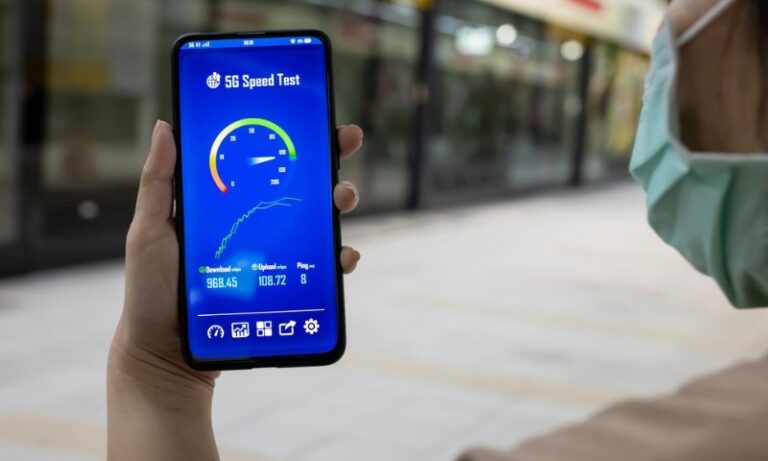
Texas continues to be one of the most competitive broadband markets in the country in 2026, with more than 40 internet service providers offering fiber, cable, DSL, and fixed wireless options statewide.
Large metropolitan areas such as Houston, Dallas, Austin, and San Antonio feature extensive fiber buildouts, while rural communities often rely on fixed wireless or satellite connections.
Ranking providers requires careful consideration of speed performance, real-world availability, pricing, and customer satisfaction.
Fast advertised speeds do not always translate to strong day-to-day performance, and broad coverage does not always mean consistent quality.
State data shows that the average maximum available download speed for Texas households is approximately 3,946 Mbps.
With that in mind, let us take a look at the best internet providers in Texas.
How to Choose the Right Provider
@gg.sheed How fast and reliable is your internet? 🤔 When choosing an ISP there are many things to consider, but it’s unfortunate that your decision can be extremely limited depending on where you live. Outside of that I would consider Reliability, Cost, Speed, and customer service. If you have the option for fiber I would always consider that first, since fiber is usually the most reliable and has consistent speeds that aren’t too dependent on how much your neighbors are using the internet. And if you’re mainly a gamer with not too many devices downloading /uploading at the same time, you probably don’t need the most expensive plan either! 200-300mbs is still pretty good and allows your to download even huge games in like 15mins. #techtok #gaming #internet #gadgets
Selecting a provider begins with matching speed tiers to household usage.
Light browsing, email, and occasional streaming require far less bandwidth than 4K streaming, remote work setups, competitive gaming, or large file uploads.
General speed guidelines help narrow options:
- Under 100 Mbps: suitable for light use and small households
- 100 to 500 Mbps: solid for families streaming and working online
- 1,000 Mbps and higher: ideal for multi-user, high-demand homes
Local availability must be verified at the address level.
Statewide coverage percentages such as 86.9% for AT&T or 91.8% for T-Mobile indicate reach, yet individual neighborhoods may have different options.
Long-term value depends on more than introductory pricing.
Equipment rental fees, data caps, installation costs, and post-promotion rate increases can significantly affect total monthly expenses.
If you are planning a conference, festival, corporate gathering, or large public event, residential plans may not provide enough bandwidth or device capacity.
In those cases, businesses and organizers can explore indoor and outdoor event wifi rental services in Texas to ensure stable, high-capacity connectivity designed specifically for temporary events.
Local customer reviews often provide insight into outage frequency, billing accuracy, and service responsiveness in a specific city.
Comparing these factors alongside published speed data leads to a more informed decision.
1. AT&T
AT&T ranks among the best overall internet providers in Texas for most households due to broad coverage, strong fiber performance, and solid customer satisfaction ratings.
Availability reaches roughly 86.9% of households across the state, placing AT&T among the most accessible major providers.
Coverage and speed tiers position AT&T as a dependable statewide option:
- Availability: ~86.9% of Texas households
- Average fiber download speed: ~4,567 Mbps
- Maximum speed in many areas: up to 5,000 Mbps
Fiber plans at these levels support demanding household activity without slowdowns. Multiple 4K streams, video conferencing for remote work, large cloud backups, and connected smart home devices can run simultaneously with consistent performance.
Customer satisfaction remains strong compared to many national competitors.
Transparent pricing in many fiber markets, contract-free options in select areas, and equipment bundles contribute to overall value.
Reliable network infrastructure and established customer support channels make AT&T a practical choice for families, remote professionals, and heavy data users who want high speeds with extensive statewide reach.
2. Google Fiber
Google Fiber delivers some of the fastest residential internet speeds available in Texas.
Average download speeds reach about 6,273 Mbps, with peak speeds up to 8,000 Mbps in select metro areas.
Performance metrics set Google Fiber apart in supported cities:
- Average download speed: ~6,273 Mbps
- Maximum speed: up to 8,000 Mbps
- Statewide availability: ~5.7% of households
Availability remains limited, concentrated in specific metropolitan zones. Access depends entirely on address, and many suburban or rural communities fall outside current coverage areas.
Remote teams transferring large files, content creators uploading high-resolution video, and competitive gamers benefit most. Where installed, network consistency and ultra-high capacity rank among the top tiers in Texas.
3. Xfinity
Xfinity continues to rank among the most widely available cable providers in Texas, covering roughly 23.3% of households statewide.
Cable infrastructure gives it strong presence in urban and suburban markets, particularly in major population centers.
Speed performance remains competitive within the cable category:
- Coverage: ~23.3% of households
- Average download speed: ~1,842 Mbps
- Maximum speed on higher tiers: up to 2,000 Mbps
Plan variety gives customers flexibility in choosing speed tiers that align with household usage.
Promotional pricing frequently lowers entry costs for new subscribers, making Xfinity a value-oriented option in many cities.
Houston speed tests often place Xfinity at or near the top for average broadband speeds locally.
Consistent performance in competitive metro markets reinforces its position as a strong cable alternative to fiber where fiber access remains limited.
4. Ezee Fiber
Ezee Fiber has gained significant attention in Houston and nearby communities due to exceptional speed performance.
Recent Speedtest data identifies it as one of Houston’s fastest broadband providers, outperforming major legacy companies such as Comcast and AT&T in certain tests.
Reported speed capabilities place it at the top end of residential service in Texas:
- Average download speed: ~8,000 Mbps
- Maximum speed: ~8,000 Mbps
- Statewide availability: ~3.5%
Availability remains limited to select neighborhoods, keeping total statewide reach relatively small.
Residents who fall within service areas gain access to multi-gig fiber capable of supporting advanced smart home ecosystems, large-scale data transfers, cloud computing, and professional-grade content production.
Rapid local expansion in Houston positions Ezee Fiber as a serious competitor in markets where cutting-edge fiber infrastructure is available.
5. T-Mobile Home Internet
T-Mobile Home Internet delivers fixed wireless broadband powered by its 5G network, providing a practical option in areas where fiber or cable lines do not reach.
Broad statewide coverage makes it one of the most accessible alternatives to wired service.
Key performance and availability metrics include:
- Coverage: ~91.8% of Texas households
- Average download speed: ~59 Mbps
- Maximum speed in many areas: up to ~100 Mbps
Setup requires no traditional technician visit in most cases.
Equipment typically arrives ready for self-installation, which benefits renters and households seeking fast activation.
Speed levels support HD streaming, video calls, online shopping, and general browsing.
Larger households with multiple heavy users may notice limits at peak times, especially on the 100 Mbps ceiling available in many areas.
6. Verizon 5G Home Internet
Verizon 5G Home Internet also relies on fixed wireless technology, offering stronger top-end speeds in supported zones compared to many other wireless options.
Core coverage and speed figures include:
- Coverage: ~73.8% of Texas households
- Average download speed: ~354 Mbps
- Maximum speed: up to ~1,000 Mbps
Higher maximum speeds provide a meaningful advantage in suburban and urban areas with strong 5G signal strength.
Flexible pricing, relatively simple installation, and reduced dependence on physical cable lines make Verizon 5G Home Internet a competitive option for residents without access to high-speed wired connections.
Summary
Fiber remains the gold standard for speed and long-term value in Texas in 2026.
Multi-gig plans push statewide maximum available speeds to roughly 3,946 Mbps on average, with top providers offering as much as 8,000 Mbps in select markets.
Cable continues to provide strong mid-to-high tier performance with broad urban availability.
Texas residents benefit from competitive choices across fiber, cable, and wireless technologies, making careful comparison essential before selecting a provider.